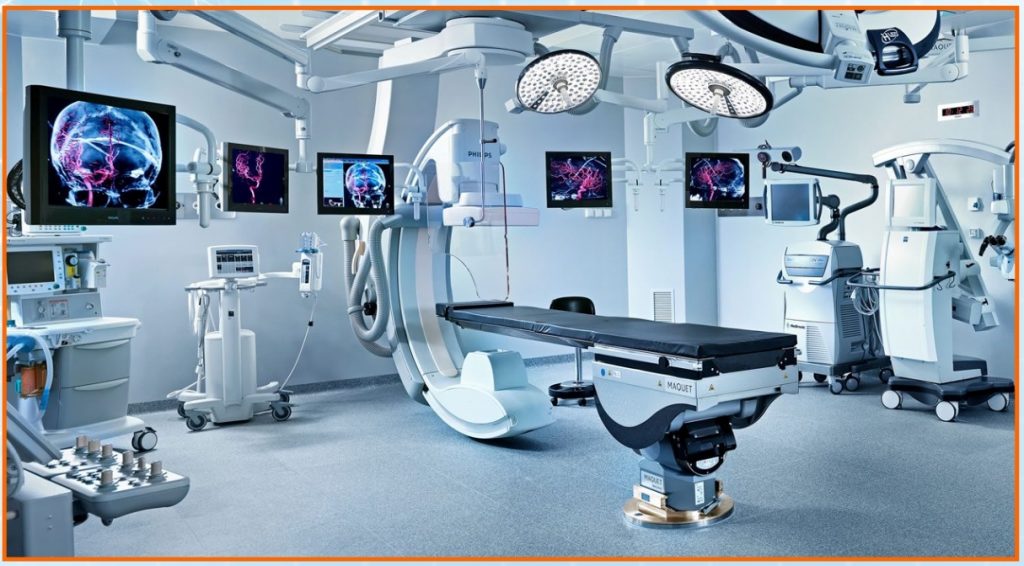
Operation Theater

INTRODUCTION:-

Operation theatre are units in the health care organization which was concerned with manipulation of human body for the purpose of treatment or diagnosis of health disorders.
While establishing an OT following points should be considered:-
*Location within the hospital
*Quantity
*Design
*Equipment requirement.

DESIGN PARAMETERS FOR SETTING UP OT:-

*Avoid unrelated hospital traffic
*Avoid out door noise
*Keep a provision for future expansion
*Easy access to department like ICU, CSSD,surgical ward.
*Sliding doors
*Smooth but non slippery floors
*Ceiling & walls painted with washable paint
*Knee, foot or elbow operated taps
*High efficiency autoclave
*Emergency communication system which can be activated with out the use of hand.
*Radiology film illuminators.

LOCATION WITH IN HOSPITAL:-

*Keep away from contaminated ward
*Avoid crowing in the OT area.
*Minimization of issue related to surgical supplies.
*Easy scheduling of surgeries.
*Near to surgical ward & ICU, radiology, pathology, blood bank & CSSD.

SIZE OF OT:-

An ideal general OT have a minimum clear area of 360 sq.ft (18ft*20ft)
But specialised OT such as cardiothoracic, orthopaedic neuro surgery etc require large area to accommodate additional equipments such as microscope, heart lung machine, ECG machine & for large surgical team.

QUANTITY OF OT:-

No of OT depends upon various factors such as:-

1. Cost benefit consideration:- The availability of the finance would dictate the number of OTs a health care facility which may also based on revenues & expenses of the hospital.

2. Patient load & disease occurrence:- the number & type of patient received & expected in the health care facility would determine what type & how many operating room would be required in hospital

3. Availability of space:- if less space available in the hospital then a central OT with multiple procedure performing capacity have to be developed but if adequate space is available separate OT such as eye OT, CTVS, neuro & gynae can be prepared.

4. No of surgical bed & speciality:- A hospital with more no of beds & multi speciality would required more no of OT as compared to to a hospital with lesser no of bed.

5. Average length of stay of hospital patient: – the no of OT calculated in the hospital on the basis of some of the above parameters by using the following equation.

NO OF SURGICAL BEDS * OCCUPANCY RATE *FULL WORKING DAYS IN A YEAR (APROX260)
/AVERAGE LENGTH OF STAY

Thus for a hospital with 500 beds, number of surgical beds could be 125.if he average length of stay for surgical patients is 10 days & occupancy is 80% then no of OT required would be:-

125*80*260 / 10 = 125*0.8*260=2600 surgeries/ year or about 10 surgeries /day

So in 8 hour 3-4 surgeries can be performed in each room & necessitating at least 3 rooms for given above pt load.

OT DESIGN:-

The basic principle of designing the OT is that the patient & staff should flow functionally & aseptically from & to the OT.

Any OT should include the following minimum service in its design:-

*Major operating room
*Recovery room
*Sub sterilizing area/ work area.
*Sterile instrument supply & storage area
*Scrub area
*Clean up area
*Male dressing room & toilet
*Female dressing room & toilet
*Nurse station/ work area
*Wheel chair & stretcher area.

ZONE:-

OT area divided in to zone for maximum protection against contamination. There are 3 zone in OT, those are:-

1. Zone I (The outer zone)
2. Zone II (middle/ intermediate zone)
3. Zone III ( inner/ most sterile zone)

1. Zone I:- (outer zone)
*This area is comparatively most unsterile zone.
*This area also known as interchange zone.
*This area include changing room, dressing room, patient reception, locker, surgeons, theatre incharge office, conference room, class room & refreshment area.

2. Zone II:- Middle/ intermediate zone:-
*This is the semi restricted area which do not permit personnel with out OT room attire.
*This area include recovery room, pre-anesthesia room, clean store room, ot sterilization equipment such as autoclave.

3. Zone III:- ( inner/ most sterile zone(
*This is the restricted area where operation performed.
*The area include scrubbing area with adequate number of sinks or through with elbow or foot controlled taps, operation room.

CLASSIFICATION OF OT:-

OT can be classified in to various categories :-

1. On the basis of extent of surgery involved:-
a. Minor OT:- Hear simple procedure are performed & most of the procedures done under local anaesthesia. Ex- suturing, dressing, casting & minor debridement.
b. Major OT:- these OT are well equipped with all the arrangement for general anaesthesia & spiral anaesthesia required for surgeries.

2. On the basis of type of service provided:-
a. Out patient OT:- located in the out patient department & involve the surgeries performed on outpatient basis. Usually minor surgeries performed under local anaesthesia.
b. Inpatient OT:- located away from the out patient department & patient have to admit in inpatient department.

3. Decentralized :- here several ot are there but each OT dedicated to a particular surgical speciality or located near the speciality or located near the speciality department.
Ex- neuro surgery
Orthopedic
Ctvs
Eye
Plastic surgery
General surgery OT
Gynae OT
Renal /urology OT
Transplant OT
Radiotherapy OT

4. On the basis of urgency of situation:-
a. Emergency OT:- here there is no planned surgeries & do not need prior list of patient to be operated. These OTs function like emergency to have ready to all time to handle any surgery which is to perform urgently.
b. Elective OT:- These are regular OTs of a hospital in which the routein planned surgeries are performed as per the list of patient decided at least one day prior to the surgery.

POLICIES AND PROCEDURES OF AN OT:-
Operation theatre should have clear cut policies & procedures in written format which also called standing orders. These standing orders deals with:-
*Function of OT.
*Duties & responsibility of doctors, nurses, technician.
*Check list for preparing the OT for surgeries.
*Posting of doctors, nurses, their working hours & responsibilities for emergency work.
*Maintenance of records for surgical procedures.
*Method of aseptic procedures
Methods of aseptic technique to be followed in OT.
*Maintenance of sterility in different zone.
*Technique of preparation for surgery by nurse & doctor
*Cleaning of OT & schedule for fumigation.
*Maintenance of equipment
*Disposal of medical weast
*Safety policies & procedures.

STAFFING PATTERN & MEMBERS OF OT TEAM:-

Benefits of good staffing norms:-
*Improve the patient outcome
*Maintain patient & staff safety
*Lower mortality rate.
*Increase OT efficiency.
*Reduce patient waiting time for surgery
*Enhance professional satisfaction
*Reduce OT case cancellation
*Balanced work load.

Essential of staffing in an OT:-

*Consideration should be given to the following while designing staff for an OT.
*Each personal is qualified, skilled & experienced to assume the responsibilities, authority, accountability & functions of the position.
*Professional qualification are validated, including evidence of professional registration/ license, where applicable, prior to employment.
*An organised medical & nursing staff shall be responsible for the quality of patient care & for the ethical conduct & professional practice of its members.
*Willingness of the staff to work long hours in standing position.

FUNCTIONS OF VARIOUS STAFFS:-

1. Registered nurse:-
*Implement patient care during the perioperative period.
*She act as a patient advocate throughout the Intraoperative period.
*She also maintain the patient safety, privacy, dignity & confidentiality.
*Scrub nurse follow the designated scrub procedure, remain in sterile field & assist doctor in procedure. She do ongoing assessment of patient condition & respond quickly to any changes.
*The circulatory nurse remain in the unsterile field also don’t were gown & gloves. They supply needed equipments from out side.
2. Surgeon:-
*Physician who perform the surgical procedure.
*The surgeon primarily responsible for:-Assess the patient condition, decide surgical intervention needed, preoperative testing, check patient safety & manage in all phase.
3. Assistant surgeon:-
*He assist the physician in whole procedure.
*The assistant usually hold retractor to expose surgical area & assist with suturing.
*He can perform some portion of surgery under surgeon’s supervision.
4. Anaesthesia care provider:-
Anaesthesiologist is the person who administer & monitor anaesthesia. Manage pain, maintain vital sign.


Anaesthesia

INTRODUCTION:-
Anaesthesia is derived from Greek word “ anaisthesis” which means not sensation. This term was listed in Bailey’s dictionary in 1721. The patient under anaesthesia are not arousable painful stimuli. They loss there ability to maintain the ventilatory function & require assistance in maintaining patient airway.

CLASSIFICATION OF ANAESTHESIA:-
Anaesthesia can be classified in to 3 types, those are:-

1. General anaesthesia:-

General anaesthesia are usually the technique of choice for patient who are having surgical procedure which require skeletal muscle relaxation for longer period of time, or extremely anxious patient, or uncooperative because of there emotional status( head injury, pathologic process, lack of maturity)
It can be provided by inhalation or intravenously.

A. Inhalation anaesthetic agent:-

* It include volatile liquid agent & gases , it produce anaesthesia when there vapour are inhaled.
* These agent are used in combination with oxygen or Nitrous Oxide.
* When these agents are inhaled they enter the blood stream through the pulmonary capillaries & act on cerebral canters to produce loss of sensation & consciousness.
* When the anaesthetic agent are discontinued the anaesthetic agent are eliminate through the lungs.
* This can be provided by using LMA( laryngeal mask airway)
This tube seal the lungs from the esophagus so if patient vomits the stomach content donot enter the lungs

B. Intravenous administration:-

* Here there is administration of IV anaesthetic agent such as barbiturate, benzodiazepines, Opoid agents etc.
* These agent used to maintain anaesthesia & also produce moderate sedation.
* Here the patient will not feel any unpleasant sensation like buzzing, roaring etc.
* The duration of action is brief & patient awake when little nausea & vomiting.
* There is no incidence of nausea & vomiting so there is no chance to increase intra ocular pressure, it is used in Eye surgery so.
* IV neuro muscular blockers( muscle relaxants) block the transmission of nerve impulse at the neuromuscular junction , it also used to relax the smooth muscle to treat endotracheal intubation, treat laryngospasm.

2. Regional anaesthesia:-

* The regional anaesthesia is injected in to the nerve which supplies to a particular region.
* The patient receiveing regional anaesthesia is awake & aware of the surround, so the health care team must be avoided careless conversation, unnecessary noise because it may cause negative response.

Epidural anaesthesia:-

* It is the injection of anaesthetic agent in to the epidural space which surrounds the dura meter of the spinal cord.
* It block the sensory, motor & autonomic function
* It differ from spinal anaesthesia by site of injection amount of anaesthetic agent used.

Spinal Anaesthesia:-

* It is the introduction of anaesthetic agent in to the subarachnoid space at the lumber level usually between L4 & L5.
* It produce anaesthesia to the lower extrimities, perineum & lower abdomen.
* Few minute after the induction of anaesthesia there is paralysis of toes & perineum & then usually leg & abdomen.
* If the anaesthetic agent reaches the upper thoracic & cervical spinal cord in high concentration there may be temporary partial or complete respiratory paralysis develop. Which may need mechanical ventilation

Local conduction block:-

* Common local conduction block includes:-
-Bracheal plexus block which produce anaesthesia of the arm
-Para vertebral anaesthesia which produce anaesthesia to nurve supplying to chest, abdominal wall & extrimities.
-Transsacral( caudal) block, which produce anaesthesia to perineum & lower abdomen.

3. Local Anaesthesia:-
It is the injection of a solution containing the anaesthetic agent in the tissue at the planned incision site.

STAGES OF ANAESTHESIA:-

General anaesthesia consist of 4 stages & each stage with specific clinical manifestation, the stages are-

* Stage I ( Beginning of anaesthesia):-
When the patient inhale the anaesthetic mixture he feel Warmth, dizziness.
The patient is still conscious but unable to move extremity, he may feel ringing, roaring or buzzing sound in the ear
In this stage the noise are exaggerated & even low voice & minor sound seem louder so unnecessary noise or motion are avoided when anaesthesia begin.

* Stage II ( Excitment):-
Hear the patient may show activity like struggling, shouting, talking, singing, laughing or crying, but it can avoided if IV anaesthesia agent are provided smoothly & quickly.
Patient pupil may dialated but contrast if exposed to light, the pulse rale is rapis, respiration may irregular.
Because of possibility of uncontrolled movement patient need to be restraint.

* Stage III (Surgical anaesthesia):-
Surgical anaesthesia is reached by administration of anaesthetic vapour or gases & supported by IV agent as necessary.
Here the patient is fully unconscious & lie quietly on the table , pupil become small, respiration regular, pulse rate become normal & skin is pink & slightly flushed.

* Stage IV ( Medullary depression):-
This stage is reached if too much anaesthesia is administrated.
Respiration become swallow, pulse is weak & thread, pupil become widely dialated & no longer contract when exposed to light.
Cyanosis develop if promptly not treated, patient may die also.

EQUIPMENTS USED FOR ANAESTHESIA ADMINISTRATION

* Continious flow anaesthetic machine
* Anaesthetic vaporizor
* Oxygen mask
* Nasal oxygen set
* Guedel airway

DRUGS USED FOR ANAESTHESIA

1. Inhalation anaesthetic agent:-
a. Volatile liquid:- Halothene, Enflurane, Isofluren, etc
b. Gases:- Nitrous oxide, Oxygen
2. Intravenous anaesthetic agent:
a. Opoid analgesic agent:- Fentanyl, Morphin sulphate, ramifentanil, sufentanil
b. Depolarising muscle relaxant:- Succinylcholine to relax the smooth muscle.
c. Nondepolarising muscle relaxant ( Intermediate onset & duration):- Atracurium for maintenance of skeletal muscle relaxation, cistracurium, vecutonium.
d. Nondepolarising muscle relaxants- (Longer onset & duration):- Metocurin & pancuronium for maintenance of relaxtation.
e. Intravenous anaesthetic agents:- Diazepam, midazolam, propofol, – all these reduce anxity & cause sedation.

Hyperemesis Gravidarum

Description

Interactable nausea & vomiting during the first trimester that cause disturbance in nutrition, fluid and electrolyte balance.

Assessment

Nausea most pronounced on raising, may occur at other times during the day.

Persistent vomiting

Weight loss

Sign of dehydration

Fluid & electrolyte imbalances

Interventions

Initiate measure to alleviate nausea, including medication therapy. If weight loss or fluid & electrolyte imbalance occur administer fluid & electrolyte intravenously

Monitor vital sign, intake output, weight & caloric count

Monitor laboratory data, sign of dehydration & electrolyte imbalance

Monitor urine for ketones

Monitor fetal heart rate, activity & growth

Encourage intake of small portions of food with low fat, easily digestible carbohydrates

Encourage the intake of liquids between meals to avoid distending the stomach & triggering vomiting

Encourage the client to sit upright after meals

Hand hygiene

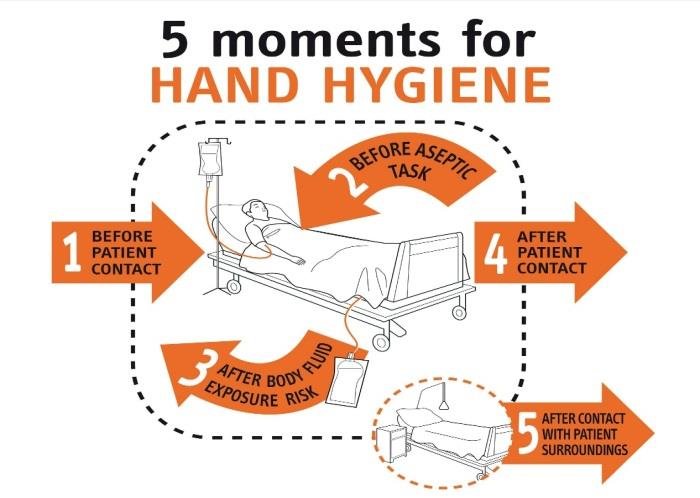
The aim of hand washing is to remove transient micro-organisms, acquired through everyday tasks in the clinical setting, from the surface of the hands. Good hand hygiene protects both patients and staff.

According to WHO guidelines there are  five key situations where hand hygiene is required.

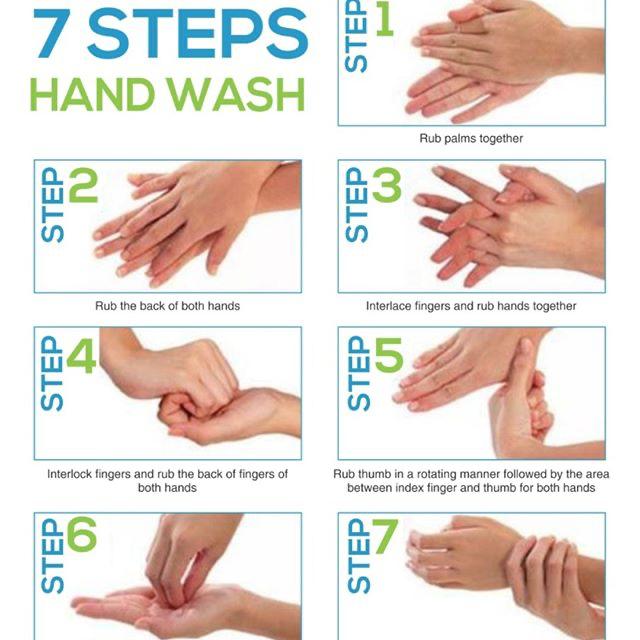
Hand washing Procedure

  • Wet hands with water, and apply soap to cover hand surfaces
  • Rub hands palm to palm
  • Right palm over left dorsum with interlaced fingers and vice versa
  • Palm to palm with fingers interlaced
  • Backs of fingers to opposing palms with fingers interlaced
  • Rotational rubbing of left thumb clasped in right palm and vice versa
  • Rotational rubbing, backwards and forwards with clasped fingers of the right hand, and vice versa
  • Rinse hands with water and dry with a single use towel
  • Use the towel to turn off the tap

Iv cannulation

OVERVIEW

IV cannulation is a technique in which a cannula is placed inside a vein to provide venous access to allows sampling of blood, as well as administration of fluids, medications, parenteral nutrition.

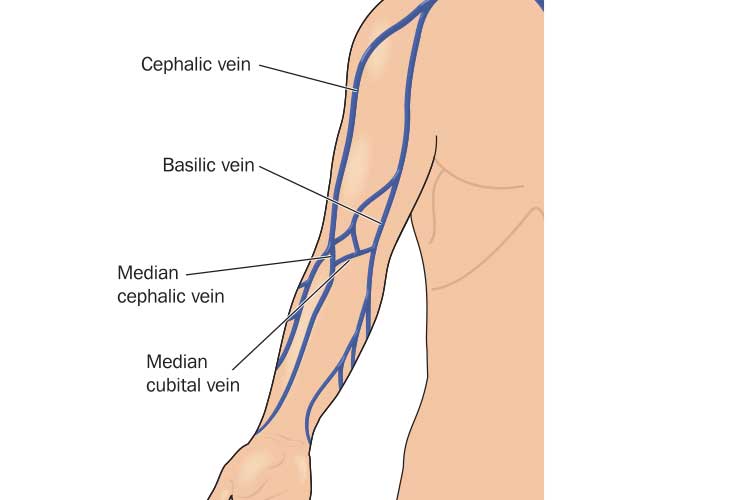
IV CANNULATION SITE

PROCEDURE

Step 01

Introduce yourself to the patient.Clarify the patient’s identity. Explain the procedure to the patient.

Step 02

Ready the following equipment

  • Alcohol cleanser.
  • Gloves.
  • An alcohol wipe.
  • A disposable tourniquet.
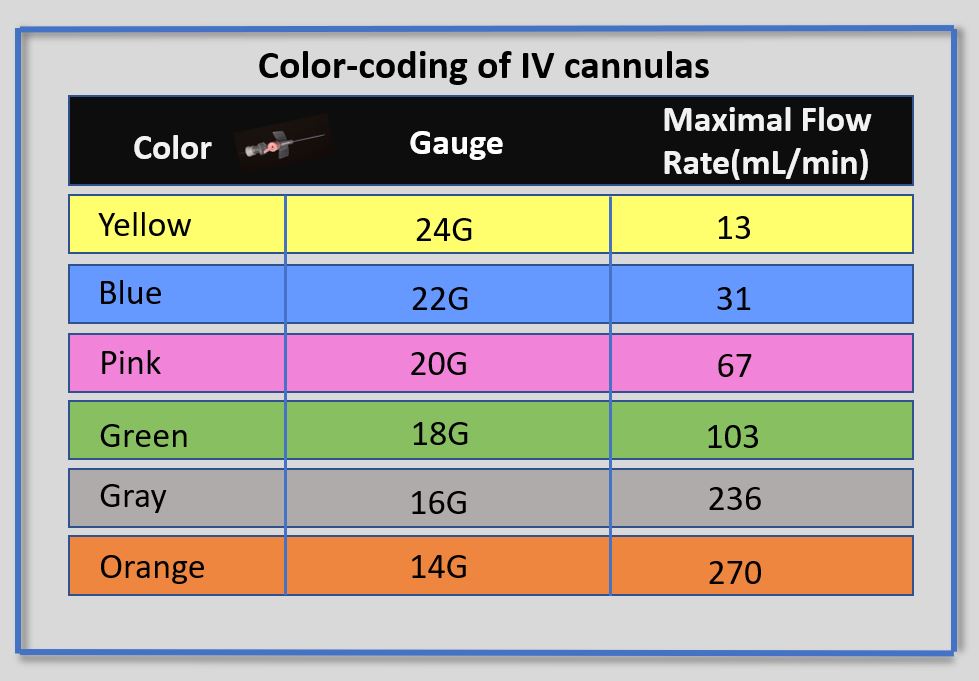
  • An IV cannula.
  • A suitable plaster.
  • A syringe.
  • Saline.
  • A clinical waste bin.

Step 03

Sanitise your hands using alcohol cleanser.

Step 04

Position the arm so that it is comfortable for the patient and identify a vein.

Step 05

Apply the tourniquet and re-check the vein.

Step 06

Put on gloves, clean the patient’s skin with the alcohol wipe and let it dry.

Step 07

Remove the cannula from its packaging and remove the needle cover ensuring not to touch the needle.

Step 08

Stretch the skin distally and inform the patient that they should expect a sharp scratch.

Step 09

Insert the needle, bevel upwards at about 30 degrees. Advance the needle until a flashback of blood is seen in the hub at the back of the cannula

Step 10

Once the flashback of blood is seen, progress the entire cannula a further 2mm, then fix the needle, advancing the rest of the cannula into the vein.

Step 11

Release the tourniquet, apply pressure to the vein at the tip of the cannula and remove the needle fully. Remove the cap from the needle and put this on the end of the cannula.

Step 12

Carefully dispose of the needle into the sharps bin.

Step 13

Apply the dressing to the cannula to fix it in place and ensure that the date sticker has been completed and applied.

Step 14

Check that the use-by date on the saline has not passed. If the date is ok, fill the syringe with saline and flush it through the cannula to check for patency.

If there is any resistance, or if it causes any pain, or you notice any localised tissue swelling: immediately stop flushing, remove the cannula and start again.

Step 15

Dispose of gloves and equipment in the clinical waste bin, ensure the patient is comfortable and thank them